


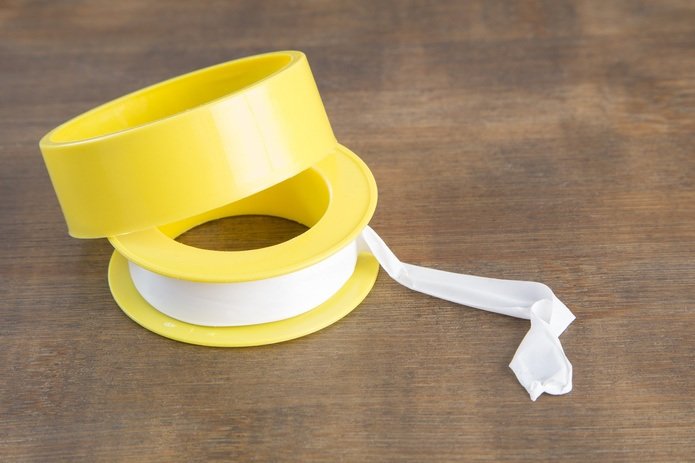
“Plumber’s tape… isn’t that how you guys hold your pants up?” While this is good for a chuckle, improper use of plumber’s tape is no joke. Plumber’s tape is a stretchy, smooth polytetrafluoroethylene (PTFE) membrane that seals water and gas pipe fittings. It’s packaged on spools that resemble rolls of surgical tape, and this is entirely appropriate given that both materials have the same purpose: to securely and precisely join two surfaces.
Where to Use It
Unlike permanent liquid joint compounds, plumber’s tape allows for easy joint connection and disconnection without the mess. It’s useful for threaded metal or rigid polymer pipes, and it’s ideal for connecting decorative plumbing fixtures such as shower heads and faucets.
Some quick facts:
- White, pink, and gray plumber’s tape is safer to use on potable water lines than most cement-style compounds.
- Gas line pipe and air tool fittings require specially rated yellow tape, with higher PSI (<2500) and heat tolerances.
- Never use plumber’s tape in conjunction with cement-style compounds.
How to Apply It
The most important step is to wind the plumber’s tape in the opposite direction to which you will screw the pipe into the fitting. Once you’ve determined the correct orientation, wipe off the threads, grab the male end of the pipe, and hold the end of the tape so that it lines up on the second thread from the end of the section.
Maintaining firm, even tension, wind the tape towards the middle of the pipe. Do not let the edges bunch or fold. When you get to the second-from-last thread on the opposite end, wind your way back to your starting point. Repeat each direction three to four times, finishing at the inward end of the threaded section. Tear off the tape and work it flush against the layer beneath with your thumb.
Where to Get It
You’ll find plumber’s tape at any hardware store. It’s sometimes called thread-seal tape or “Teflon tape”; the latter also refers to several very different products, each with widely varied applications.
Don’t buy the cheapest brand! High-quality plumbing tape, penny for penny, is the most cost-effective way to protect your property from catastrophic flood damage.
You can also get the right tape when you hire Brian Wear Plumbing for your installations, repairs, or upgrades. We’re often called out to correct problems that arise with understandably misused techniques, tools, and plumbing products. For more information before starting your DIY project or for help with any of your plumbing needs, contact us today!


